We are selling MS Pipes, HDPE Pipes, D & E Class UPVC Pipes.
We are the company agent of
Hatim Polymer Ltd.
National Polymer (NP) Ltd. and
Lira Polymer Industries Ltd.
MS PIPE
MS (Mild Steel) pipes can be either ERW (Electric Resistance Welded) or seamless, this difference in manufacturing leads to key distinctions in strength, pressure rating, and cost, with seamless pipes generally having higher pressure ratings and ERW pipes being more cost-effective.
ERW (Electric Resistance Welded) pipes
Manufacturing: A strip or coil of steel is rolled and formed into a tubular shape, and the seam is welded using an electric current. This process creates a straight weld line.
Applications: Suitable for low to medium-pressure applications such as water, oil, and gas transportation in non-demanding environments.
Characteristics: Faster and more cost-effective to produce than seamless pipes.
Pros: Lower cost.
Cons: The weld seam can be a potential weak point for very high-pressure applications.
Seamless pipes
Manufacturing:A solid steel billet is heated and extruded through a die to form a hollow pipe with no weld seam.
Applications: Ideal for high-pressure applications like those in the oil and gas industry, petrochemicals, and boilers.
Characteristics: Known for superior strength, integrity, and a smooth interior surface.
Pros: Higher pressure and strength ratings, and better resistance to corrosion.
Cons: More expensive to produce.
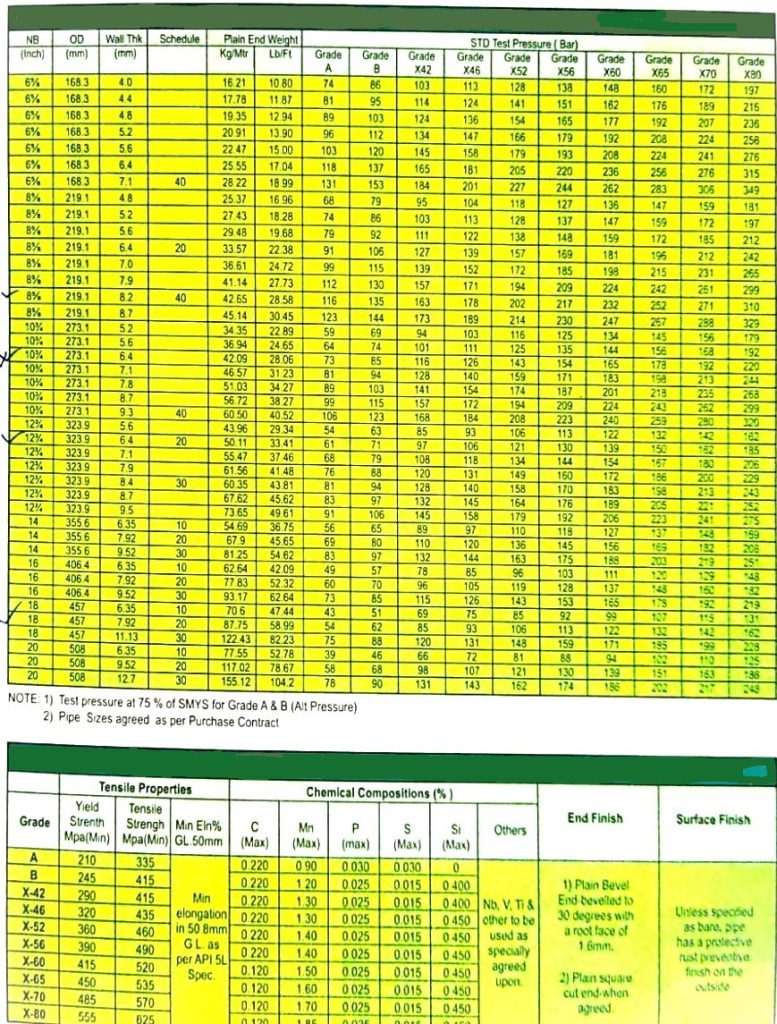
Available MS Pipes Dimension
HDPE Pipe
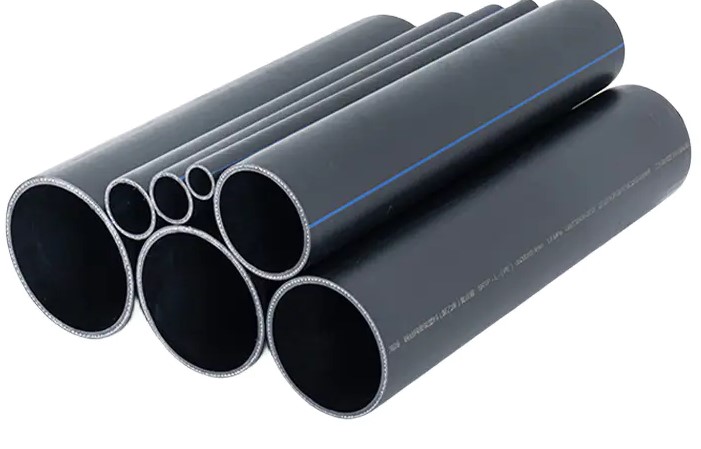
HDPE pipe is a durable and flexible plastic pipe made from high-density polyethylene, a petroleum-based thermoplastic polymer. HDPE pipe is Flexible, durable, corrosion-resistant, chemical-resistant and impermeable, lightweight, eco-friendly and it can be heat-fused to create a nearly 100% leak-proof system.
Common applications
Water supply and distribution
Drainage and sewage systems
Oil and gas gathering lines
Telecommunication and electrical conduit
Industrial liquids and chemical processing
Agriculture and irrigation
Fire protection systems
D & E CLASS PIPES
Class E uPVC
Pressure rating: Engineered for higher-pressure applications, typically rated at 15 bar (150 meters head of water) at 20°C.
Wall thickness: Thicker walls than Class D pipes, which gives them a higher-pressure rating.
Best for:
Demanding applications like deep tubewells,
high-pressure industrial systems, and
water supply lines where higher water pressure is expected.
Class D uPVC
Pressure rating: Designed for medium-pressure applications, typically rated at 12 bar (120 meters head of water) at 20°C.
Wall thickness: Thinner walls than Class E pipes.
Best for:
General water supply,
agricultural irrigation systems, and
tubewell connections that operate at moderate pressure.