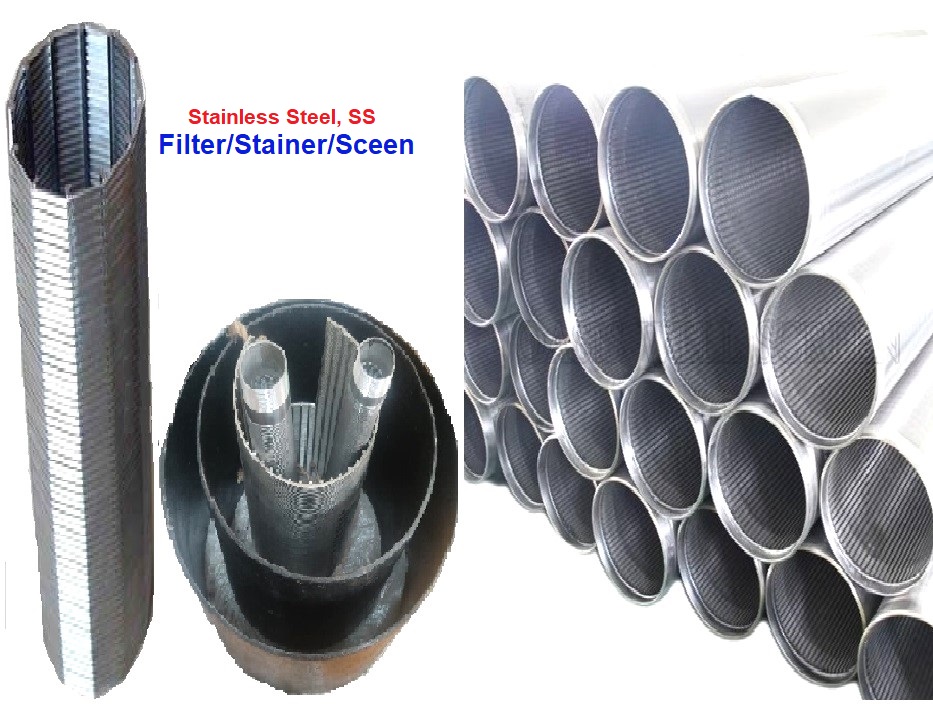
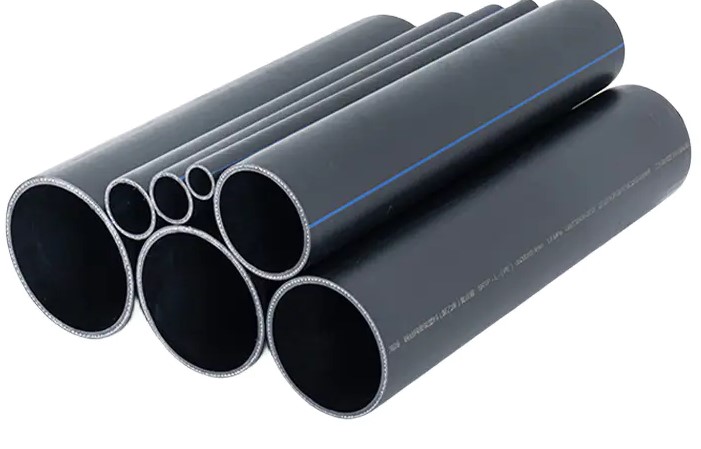
A deep tube well filter, often called a strainer is prevents sand, debris, and sediment from entering the pipe while allowing clean water to flow into the well. It’s typically a perforated or slotted stainless-steel/UPVC pipe at the well’s lower end, sometimes with a fine mesh screen, designed to work with specific geological conditions to ensure clean water extraction, protect the pump, and prolong the life of the well.
How it works
The filter is placed at the bottom of a deep tube well, positioned within an aquifer.
It allows water to flow in while blocking sand and other sediment into the well pipe.
This protects the pump from damage and keeps the water supply cleaner.
Key features
Material: Often made of stainless steel and also available in UPVC, C-D-E Class.
Design: perforated or slotted pipe, or mesh screen.
Placement: The length and location of the filter are determined by the location of the aquifer.
How to select the right slot size
Analyze the aquifer’s sediment: A sieve analysis to determine the average particle size and match slot size to sediment,
Fine sand: Use a smaller slot size, such as 0.1 mm to 0.75 mm.
Coarse sand and gravel: up to 3 mm.
Consider filtration efficiency: A smaller slot size is more precise but may reduce water flow. A larger slot size increases the open area, which can improve efficiency and reduce entrance velocity, minimizing sand pumping.
Choose a robust filter type: For deep or high-pressure wells, slotted or wedge wire screens are recommended for their strength and durability.
Different Size:
Common standard slot sizes include (in mm):
Fine: 0.1 mm, 0.15 mm, 0.2 mm, 0.25 mm
Medium: 0.3 mm, 0.4 mm, 0.5 mm, 0.6 mm, 0.7 mm, 0.8 mm